Holiday Home preferences are saved.
You Can Afford the Caravan, But Can You Afford to Own It?
A £70,000 static caravan for sale can look surprisingly affordable when you compare it with the cost of hotels, cottages and family holidays over several years.
But, there’s a question every prospective owner should ask before getting carried away with the idea of having their own holiday home:
Can you afford to own it, rather than simply afford to buy it?
Those are two very different things.
One of the biggest mistakes buyers make is focusing on the purchase price.
They find a caravan within budget, work out how they will pay for it and start imagining weekends away.
The assumption is that once the purchase is made, the expensive part is largely over.
Unfortunately, it isn’t.
The real cost of owning a static caravan is spread across every year you have it.
Depending on the park, the caravan, how often you use it and how far you travel, those ongoing costs can make a big difference to whether ownership feels like a pleasure or a financial burden.
The Advertised Price Isn’t the Price of Ownership
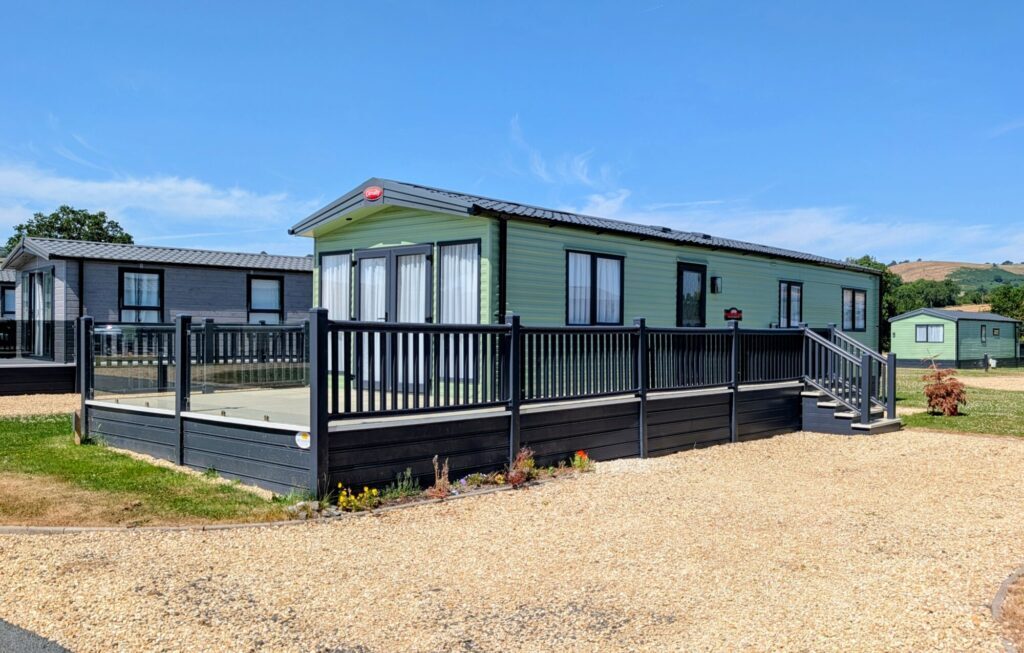
Imagine you have £70,000 available and you find a static caravan you absolutely love.
It has the bedrooms you need, a great kitchen, a spacious lounge and a decking area that looks perfect for summer evenings.
On paper, you can afford it.
But, before deciding that you’ve found your holiday home, you need to look beyond the figure on the advert.
There could be:
- Annual site fees
- Insurance
- Electricity and gas
- Maintenance and repairs
- Cleaning and upkeep
- Travel costs to and from the park
- Costs associated with decking or other pitch improvements
- Park-specific charges
- Replacement furniture or appliances over time
- Potential costs when you eventually want to move on from the caravan
None of these necessarily make static caravan ownership a bad idea.
The point is that £70,000 isn’t really your ownership budget, it’s your purchase budget.
That’s an important distinction.
The Cheapest Caravan Isn’t Necessarily the Cheapest Option
This is where buying a static caravan gets more complicated – and if you ask us, more interesting.
It’s tempting to search by price and assume that the cheapest suitable caravan has the best value.
Sometimes it will.
An older static caravan in a fantastic location, on a clean and popular park with manageable costs, could be a much better purchase than a newer, more expensive model somewhere that doesn’t suit you.
But, the opposite can also be true.
A £40,000 caravan isn’t automatically cheaper to own than a £60,000 one.
The purchase price is only one part of the equation.
What matters is what the whole ownership package costs you, and what you get in return for that money.
That means looking at the caravan and the holiday park together, rather than treating them as separate decisions.
Site Fees Can Change Things Completely
For most buyers, site fees are one of the biggest ongoing costs to understand.
This is why you shouldn’t choose a static caravan first and worry about the park afterwards.
Different parks have different fee structures, facilities, locations, rules and terms.
Some may offer extensive facilities and entertainment; others may be much quieter and have fewer amenities.
Neither is inherently better.
The important question is whether you’re paying for things you actually want to use.
If you want a quiet base near the coast and rarely use swimming pools, arcades or organised entertainment, paying more for a park packed with facilities might not represent good value for you.
But, if you’re buying somewhere specifically for family weekends and expect to spend most of your time using the park’s facilities, a cheaper, quieter site might not deliver the experience you’re looking for.
This is why comparing site fees in isolation can be misleading.
You need to think about what you’re getting for those fees, and would you choose to pay for it anyway?
How Often Will You Actually Use It?
Here’s another question that doesn’t get enough attention.
How many nights a year will you really spend in your caravan?
It’s easy to imagine using a holiday home constantly.
Every sunny weekend, half terms, bank holidays, Christmas and random Friday nights when you fancy getting away.
The reality can be different.
Work gets busy, family commitments appear, the weather isn’t great, someone gets ill or you have other holidays booked.
Maybe the two hour journey you thought would be easy becomes less appealing when you’ve had a long week.
That doesn’t mean you shouldn’t buy.
It means you should base the decision on the holidays you’re realistically likely to take, rather than the holidays you imagine taking when you’re standing in a showground looking at a beautiful caravan.
If you’re going to use your holiday home regularly for years, ongoing ownership costs can make sense.
If you think you’ll only use it a handful of times each year, it’s worth doing the maths carefully.
Don’t Forget the Cost of Getting There
This is an easy one to overlook.
A holiday home might be £20,000 cheaper than another option, but if it is several hours further from home, how often are you actually going to visit?
Fuel, parking, charging costs if you have an electric vehicle, and the value of your time all form part of the ownership experience.
If you ask us, distance should be treated as an ownership cost, even though it doesn’t appear on the static caravan’s price tag.
A park that’s close enough for spontaneous weekends might ultimately provide more value than a cheaper caravan that requires a major journey every time you want to use it.
Some Costs You Can’t Predict
Every static caravan owner will eventually encounter maintenance.
It might be something minor.
It might be an appliance that needs replacing, a plumbing issue, damage caused by weather or general wear and tear.
You can’t predict exactly what will happen or when.
That’s why you should avoid having a buying budget that leaves absolutely nothing spare after the purchase.
If spending £70,000 means emptying your savings account, what happens when something needs repairing?
What happens if an unexpected expense appears elsewhere in your life?
Owning a holiday home should give you more freedom, not leave you feeling financially trapped by it.
What Happens When the Caravan Gets Older?
There’s another part of the calculation that buyers don’t always consider at the beginning – eventually, your caravan will be older than it is today.
That doesn’t mean it suddenly becomes worthless.
Many holiday homes can continue to provide years of enjoyment.
But, you shouldn’t build your financial plans around the assumption that you’ll always be able to sell it for what you paid.
Static caravans aren’t the same as bricks-and-mortar property.
Their value can be affected by age, condition, location, park rules, demand and whether a particular park accepts older units.
So, when you’re calculating affordability, treat the caravan as a lifestyle purchase first and a financial asset second.
If it retains value and you achieve a good resale price later, that’s a bonus.
The Real Question Isn’t “Can I Afford £70,000?”
This is the mindset we’d encourage prospective buyers to change.
Don’t simply ask, can I afford this caravan?
Ask, can I comfortably afford everything that comes with owning this caravan?
Then go one step further.
Will you still be comfortable paying those costs if you use it less than expected one year?
That question matters because affordability isn’t just about the best case scenario.
If you can only make ownership work if you use the caravan every other weekend, never have a major repair and nothing else financially changes, the budget is probably too tight.
A good static caravan purchase should leave you with some breathing room.
Sometimes Spending More Upfront Can Make Sense
This isn’t an argument for always buying the cheapest caravan.
In fact, sometimes the opposite approach can be more sensible.
A newer or better equipped holiday home might provide the layout, comfort and facilities you want for many years.
A better location might mean you’ll use the caravan far more often.
A park with the right facilities could make it much more enjoyable for your family.
The key is understanding what you’re paying more for.
If an extra £10,000 gets you something that genuinely improves your ownership experience, it could be money well spent.
If you’re spending it simply because the kitchen looks nicer in the photographs, think twice.
Ready to Look at Static Caravans for Sale?
At Parklink, we believe choosing a holiday home should start with finding the right combination of location, holiday park and property.
Look beyond the price tag, compare the park, understand the ongoing costs and think honestly about how often you’ll use it.
Then, when the numbers and the lifestyle both make sense, start looking at static caravans for sale in the UK.
The best holiday home isn’t necessarily the one you can just about afford to buy.
It’s the one you can afford to enjoy.