Holiday Home preferences are saved.
Your Static Caravan Will Lose Value. So Why Buy One?
Search for static caravans for sale and you’ll find plenty of reasons to buy one.
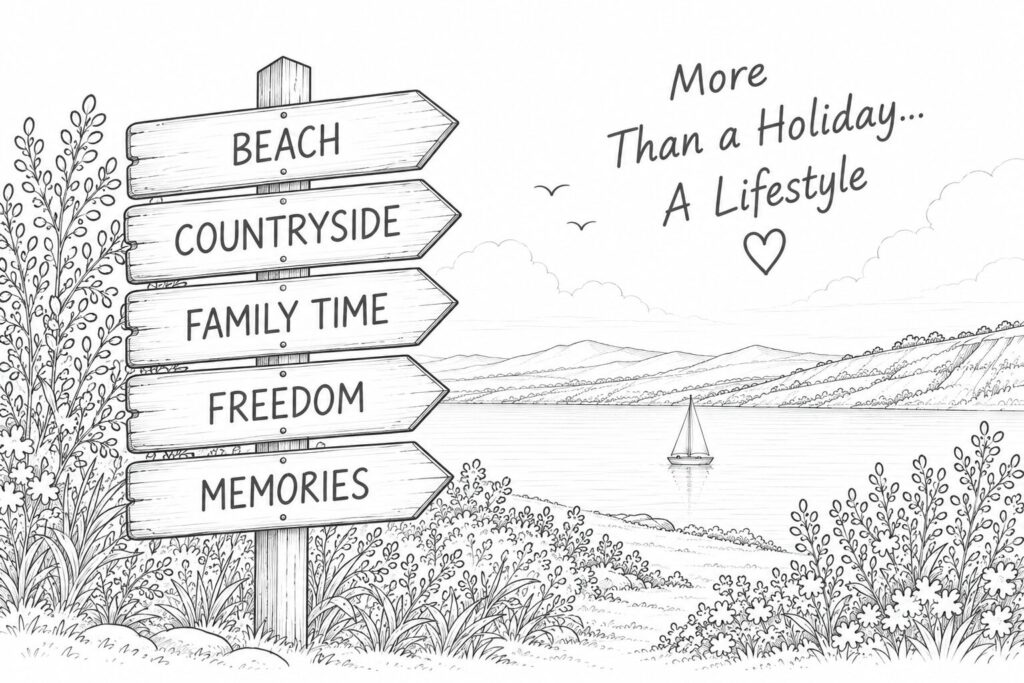
Freedom. Family holidays. Weekends by the coast. Your own place in the countryside. No need to book accommodation every time you want to escape.
But there’s one subject that’s sometimes harder to find amongst the glossy photographs and beautiful decking.
Depreciation.
So let’s talk about it.
A static caravan is unlikely to be worth more simply because you’ve owned it for several years. Like many leisure purchases, it can depreciate, and the biggest change in value can often be felt when buying brand-new and selling again relatively quickly.
Does that mean buying a static caravan is a bad financial decision?
Not necessarily.
Because perhaps we’re asking the wrong question.
A static caravan isn’t primarily an investment.
It’s a lifestyle.
And once you start looking at ownership that way, its value becomes much more interesting.
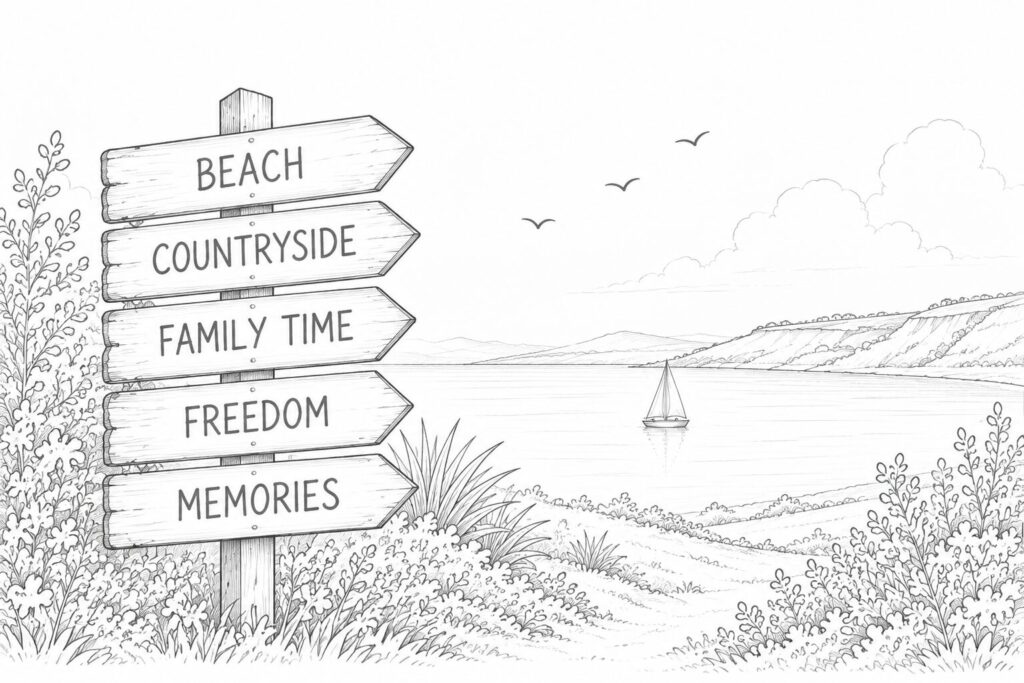
Nobody Asks for Their Money Back After a Cruise
Imagine spending £10,000 on an incredible cruise.
You visit places you’ve always wanted to see. You eat fantastic food. You spend time with your family. You come home with hundreds of photographs and memories you’ll probably talk about for years.
What don’t you do when you arrive home?
Ask:
“How much can I sell my cruise for now?”
Nothing.
The £10,000 bought the experience.
Of course, a static caravan isn’t exactly the same.
When you buy a holiday home, you own something tangible that may retain a meaningful resale value. If you’ve bought well and looked after it, there will hopefully still be value in your caravan when the time eventually comes to sell.
But perhaps part of its value should be measured in the same way as that cruise.
What did owning it allow you to experience?
That’s the part a resale valuation can never measure.
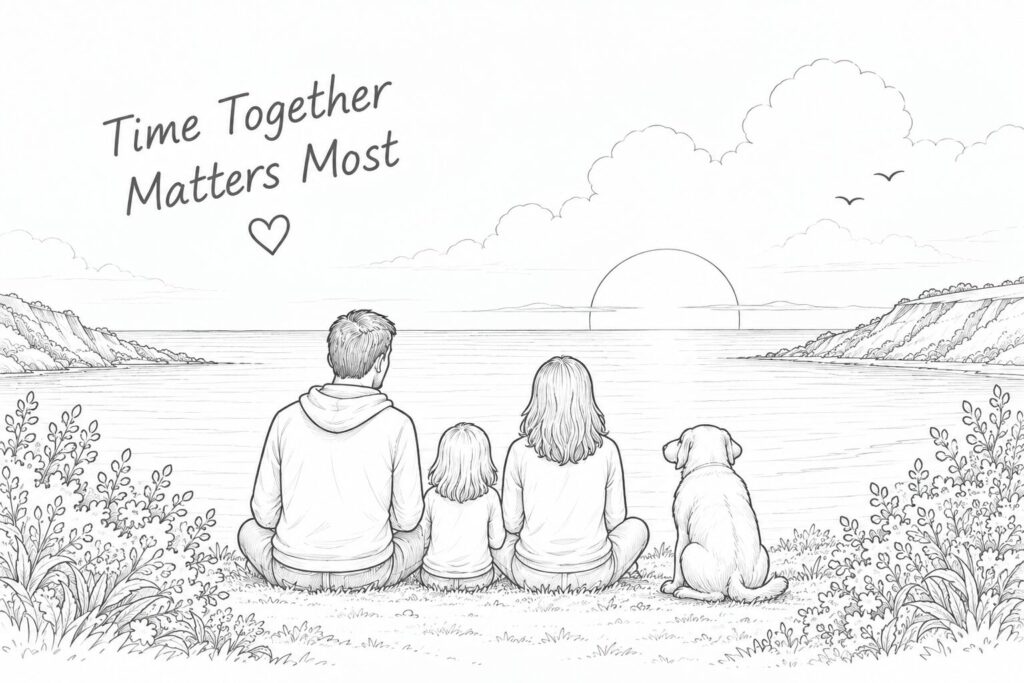
A Static Caravan Isn’t an Investment. It’s a Lifestyle.
We think this distinction matters.
If you’re buying a static caravan primarily because you expect it to make you money or increase in value, we’d suggest reconsidering your reasons for buying.
Holiday home ownership is fundamentally a leisure purchase.
You’re buying somewhere to escape to.
Somewhere that’s yours.
Somewhere you can return to without searching Booking.com every time there’s sunshine forecast for the weekend.
And for many owners, that freedom is where the real value lies.
The Best Part of Ownership? Not Having to Book
I’ve owned a holiday home myself, and one of the things I enjoyed most was incredibly simple.
I could just go.
If I had some free time, I could pop down.
There was no searching for somewhere available. No comparing hotel prices. No worrying whether my favourite place was already booked.
It was my own place.
That’s surprisingly difficult to put a financial value on.
Imagine finishing work on Thursday and seeing that Saturday is going to be glorious.
You don’t need to decide whether a hotel charging £250 for the night is worth it.
You don’t even really need to plan a holiday.
You just go to your holiday home.
That’s what ownership can give you that a traditional annual holiday doesn’t.
Stop Trying to Calculate Everything Per Night
There’s a temptation to turn holiday home ownership into a spreadsheet.
Purchase price + annual site fees + running costs ÷ nights used = cost per night.
Mathematically, there’s nothing wrong with doing that.
But it can completely miss the point.
If you spend £8,000 or £10,000 taking the family on a luxury holiday once a year, you might have a fantastic couple of weeks.
Then it’s over.
Owning a static caravan is a different proposition.
You might spend Easter there.
Then a couple of weekends in May.
A week during summer.
Another spontaneous weekend because the weather looks good.
A birthday.
Half term.
A quiet autumn weekend when you simply want to get away.
The question isn’t necessarily:
“Could I find a hotel room for less per night?”
A better question might be:
“What sort of lifestyle does this money give me?”
The Real Return on Ownership Is Freedom
Freedom is probably one of the most underrated parts of owning a static caravan.
You have somewhere familiar waiting for you.
Your clothes might already be there.
Your favourite mug is in the cupboard.
The children’s things are there.
You know the park.
You know the local pub.
You know which beach you like.
You know your neighbours.
Over time, a holiday park can stop feeling like somewhere you visit and start feeling like somewhere you belong.
That sense of familiarity, security and belonging is difficult to reproduce by booking a different hotel or holiday cottage every time you go away.
And it’s one of the reasons some people remain holiday home owners for many years.
But There’s a Catch: You Have to Use It
Here’s where we’d encourage buyers to be very realistic.
A static caravan you don’t use can become an expensive ornament.
If you’re buying because you think you’ll visit every other weekend, ask yourself whether that’s genuinely realistic.
How far away is the park?
How busy is your life?
What do you normally do at weekends?
Would you still visit outside July and August?
Do you actually love the location enough to return regularly?
These aren’t particularly exciting questions when you’re standing inside a beautiful new holiday home.
But they’re important.
The owners who get the greatest lifestyle value from their caravan are generally going to be the people who actually use it.
Don’t Buy a Static Caravan for Your Family
That sounds harsh.
What we really mean is:
Don’t buy one purely because you think everybody else will use it.
It’s easy to imagine the children, grandchildren, friends and extended family constantly wanting weekends at your holiday home.
And perhaps they will.
But people’s lives are busy.
Children grow up.
Teenagers develop their own interests.
Family members who initially seem incredibly enthusiastic may not visit anywhere near as often as you expected.
So there’s a simple test.
Would you still buy the caravan if nobody else ever used it?
If the answer is yes, great.
Buy because you want the lifestyle.
If children and grandchildren subsequently spend countless happy weekends there, that’s a wonderful bonus.
But don’t make their predicted future use the entire justification for your purchase.
Think Five Years, Not Five Minutes
Static caravan ownership generally makes more sense when you approach it as something you’ll enjoy for a reasonable period.
Buying today and worrying about what you’ll get back next year puts an enormous focus on short-term resale value.
Instead, think about what ownership could look like over five years or more.
How many weekends could you spend there?
How many summer holidays?
How many spontaneous breaks?
How much family time?
That’s particularly relevant because depreciation can be more noticeable during the earlier stages of ownership, especially with some brand-new holiday homes.
The longer you enjoy the caravan, the more opportunity you have to receive the thing you actually bought it for:
the lifestyle.
The Pre-Loved Static Caravan Can Be a Brilliant Buy
Brand-new isn’t automatically best.
There are some excellent pre-owned static caravans for sale, and for the right buyer they can make a huge amount of sense.
Someone else has already owned the holiday home through its earliest years.
It may already have decking.
Furniture may be included.
Kitchen equipment, televisions, outdoor furniture and other contents may sometimes form part of the sale.
And importantly, some of the initial depreciation associated with buying new may already have happened.
That doesn’t mean every used caravan is automatically a bargain.
Condition, age, park terms, licence period, pitch, running costs and the asking price all need considering.
But we’d never dismiss a holiday home simply because somebody else has loved it first.
Sometimes pre-loved is exactly where the value is.
Don’t Trade Your Caravan Just Because Something Shinier Appears
Holiday home manufacturers continually introduce beautiful new models.
Walk inside one and it’s very easy to start imagining an upgrade.
Bigger kitchen.
Better furniture.
Freestanding bath.
More glass.
Bigger television.
Perhaps even a hot tub outside.
There’s nothing wrong with upgrading if that’s genuinely what you want.
But don’t convince yourself that you have to continually replace a perfectly good caravan.
Trading regularly can expose you repeatedly to the difference between buying and resale values.
If your existing caravan still suits you, you love your pitch and you’re enjoying ownership, keeping it longer may make considerably more sense.
Upgrade because the new holiday home will genuinely improve your lifestyle.
Not simply because it’s newer.
Site Fees Matter More Than Many First-Time Buyers Realise
The price of the holiday home gets most of the attention when people first start browsing static caravans for sale.
But there’s another number you need to understand:
the annual site fee.
Your caravan has an agreed purchase price when you buy it.
Site fees are different.
They’re an ongoing cost of having your holiday home on the park and can change over time.
Different parks also offer very different things for their fees.
A large resort with swimming pools, entertainment, restaurants and extensive facilities is a very different proposition from a small countryside park with minimal facilities.
Neither is automatically better.
But before buying, understand:
- The current annual site fee
- What is included
- What is charged separately
- When fees are reviewed
- Other ongoing ownership costs
- The park’s ownership and licence terms
Where possible, ask the park what information or reassurance it can provide about fees and longer-term ownership costs.
Don’t stretch your finances based solely on today’s site fee.
Leave yourself room for the future.
Subletting Can Help – But Don’t Rent Away Your Freedom
Subletting can be a great option on holiday parks where it’s permitted.
Rental income may help offset some of the costs of ownership, subject to demand, park terms, commissions, running costs and the individual holiday home.
But there’s something buyers can easily overlook.
The biggest benefit of ownership is often freedom.
You bought your caravan partly so you could decide on Thursday that you’re going away on Friday.
If you’ve rented it to somebody else for every desirable week of the season, you’ve potentially removed some of that freedom.
One approach worth considering is letting strategically rather than constantly.
For example, an owner might choose a defined block of peak weeks for subletting while protecting plenty of the season for their own spontaneous use.
There’s no universal right answer.
Just don’t become so focused on maximising rental income that your own holiday home becomes somewhere everybody gets to enjoy except you.
Will a Static Caravan Always Lose a Fortune?
No.
Depreciation isn’t a simple straight line, and static caravans don’t all perform identically when they’re eventually resold.
Value can be affected by factors including:
- What you paid originally
- Whether you bought new or pre-owned
- Age and condition
- Manufacturer and model
- Location
- Holiday park
- Pitch
- Decking and extras
- Remaining licence or park terms
- Market demand at the time
- Whether you’re selling privately or trading
A well-bought caravan can retain meaningful value, and good private-sale opportunities can sometimes perform differently from the traditional buy-new-and-trade-later route.
That’s why buying well in the first place matters.
But we’d still be uncomfortable telling somebody to buy a static caravan on the assumption that they’ll get most or all of their money back.
If that happens, fantastic.
It shouldn’t be the reason the purchase works for you.
The Biggest Mistake Might Be Selling Too Soon
We’ve seen another scenario worth thinking about.
Someone buys a holiday home.
They enjoy it.
Then a newer model catches their eye.
They’re offered a trade-in price considerably below what they originally paid and suddenly feel as though their caravan has been a bad purchase.
But was it?
Perhaps the real question is whether they actually needed to sell it at that point.
The moment you sell or trade is when depreciation becomes very real.
If the existing holiday home still does everything you need and the park’s terms allow you to continue enjoying it, keeping it longer could completely change how you view the original purchase.
This comes back to buying with a longer-term mindset.
Who Shouldn’t Buy a Static Caravan?
This might seem like a strange thing for Parklink to say.
After all, we advertise static caravans for sale.
But holiday home ownership isn’t right for everybody.
We’d seriously reconsider buying if:
- You’re unlikely to use the holiday home regularly.
- You’d need guaranteed rental income to make the finances work.
- Annual site fees and running costs would put pressure on your household finances.
- You’re primarily buying because you expect the caravan to increase in value.
- You’re relying on children or other family members using it to justify the cost.
- More important financial priorities aren’t yet secure.
That final point matters.
For most people, a holiday home should be an extra.
Get your main home and everyday finances where you need them. Make sure the car, household costs and other priorities are comfortable.
Then, if you can genuinely afford something extra that could improve your lifestyle, owning a holiday home becomes a much more sensible conversation.
Don’t compromise the life you have to buy somewhere to escape from it.
Buying a Static Caravan Should Feel Comfortable
There’s a big difference between being able to technically afford something and being comfortable owning it.
If every annual bill causes anxiety, you’re unlikely to enjoy the freedom that attracted you to holiday home ownership in the first place.
That’s why we’d rather see somebody buy a £30,000 pre-owned caravan they can comfortably afford than stretch themselves to £100,000 simply because somebody convinced them the more expensive model was better.
Luxury is lovely.
Financial breathing room is pretty nice too.
Small Independent Park or Major Holiday Park Group?
There’s no correct answer here either.
Parklink promotes holiday homes across more than 300 UK holiday parks, ranging from major holiday park groups to smaller independent and family-run parks.
We have a particular soft spot for discovering brilliant little independent parks that buyers might otherwise never find.
But that doesn’t mean small parks are automatically better.
A large holiday park group may offer swimming pools, restaurants, entertainment, activities and professional letting services that are absolutely perfect for one family.
Someone else may want an owners-focused park with hardly any facilities and peace and quiet from morning until night.
Both buyers can be right.
The mistake is assuming everybody wants the same thing.
Why Parklink Doesn’t Care Which Static Caravan You Buy
Parklink is fully independent.
We’re not here to convince you to buy from one particular holiday park group, manufacturer or seller.
We bring together holiday homes from hundreds of parks around the UK, including large groups, independent parks and private sellers.
We want that choice to become even bigger.
What matters to us isn’t whether you choose a huge holiday resort, a tiny countryside park, a brand-new luxury model or a ten-year-old pre-loved caravan.
What matters is that you’ve done your research and you’re making the right decision for you.
Because the best static caravan isn’t necessarily the most expensive one.
It’s the one you can comfortably afford, on a park you love, somewhere you’ll genuinely use it.
You can explore static caravans for sale across the UK with Parklink and compare holiday homes, locations and different types of holiday parks in one place.
So, Your Static Caravan Will Lose Value. Should You Still Buy One?
Possibly.
But only for the right reasons.
If you’re buying because you’ve been promised a guaranteed financial return, we’d be cautious.
If you’re stretching your finances and hoping subletting will somehow make everything work, we’d be cautious.
And if you know deep down that you’ll hardly ever visit, we’d question whether ownership is right for you at all.
But what if you can comfortably afford it?
What if you’ve found somewhere you love?
What if you’ll genuinely use it?
What if being able to disappear for the weekend whenever you fancy sounds fantastic?
Then depreciation isn’t the only calculation that matters.
Ask the owner who spent five summers there with their grandchildren.
Ask the couple who disappeared to the coast whenever the sun came out.
Ask the angler who woke up beside their favourite fishing lake weekend after weekend.
Then ask somebody who spent £10,000 on the holiday of a lifetime whether they came home disappointed because they couldn’t sell the holiday afterwards.
A static caravan isn’t primarily an investment.
It’s a lifestyle.
Buy the right one.
Buy it for the right reasons.
Make sure you can comfortably afford it.
And then use it.